Building Knowledge
Wall assembly comparison: what architects need to know
Understanding what a wall separates can help clarify the assembly, performance requirements and products to consider.
Demising walls, area separation walls (ASW) and party walls are often confused, but each serves a different purpose in building design. Learn how these wall types differ by function, location, ownership and performance requirements, especially when fire resistance and sound control are priorities. When reviewing a UL assembly for one of these applications, ensure the complete assembly is followed as specified.
Start with what the wall separates
The easiest way to distinguish between these assemblies is to ask what type of boundary the wall creates. A demising wall creates an occupant or tenant boundary. An area separation wall creates a building or code-defined boundary. A party wall creates a property ownership boundary.
That distinction matters because each wall type may be associated with different design priorities. One project may focus on acoustical privacy between units; another may require a fire-rated separation between attached structures, and another may involve ownership or property-line considerations.
Quick comparison: Three wall assemblies that are easy to confuse
Although these wall types may look similar in the field, they are not interchangeable. The comparison chart below provides a practical way to understand the differences.
- Demising wall: separates occupants or tenants.
- Area separation wall: separates buildings or building areas for code purposes.
- Party wall: separates property ownership interests.
Each wall assembly should be evaluated based on its role in the project, not just its location. The key questions are: What does the wall separate? Why is the separation required? What performance requirements apply?
| Wall assembly | What it separates | Why it matters | Common applications | Performance considerations |
|---|---|---|---|---|
| Demising wall | Adjacent tenant, dwelling or occupiable spaces | Defines occupancy boundaries and supports privacy between spaces | Apartments, condos, hotel rooms, office suites and retail spaces | Sound control, fire resistance, smoke control and occupant privacy |
| Area separation wall | Buildings or portions of a structure treated separately by code | Helps separate building areas for life-safety and code compliance purposes | Attached townhomes, multifamily buildings and connected building sections | Fire resistance, structural independence, continuity and code-defined separation |
| Party wall | Separately owned properties or ownership interests | Establishes a shared wall condition tied to property ownership | Properties with a shared wall on or near a property line | Ownership agreements, fire resistance, shared maintenance and construction limitations |
Why the difference matters
- Code interpretation: The wall type can affect how fire resistance, continuity and separation requirements are evaluated.
- Product selection: The required assembly may influence gypsum board type, framing, insulation, sealants and other components.
- Sound control: Occupant or tenant separations may require special attention to acoustical performance and STC ratings.
- Ownership and maintenance: Party walls may involve property ownership, shared maintenance and legal considerations outside the wall assembly itself.
- Project communication: Using the right terminology helps architects, contractors, code officials and owners avoid confusion.
In short, these terms are not just labels. They can affect how the assembly is detailed, reviewed and built.
5 questions about multifamily and area separation walls
Learn when repairs, door additions and fireblocking requirements come into play.
Read more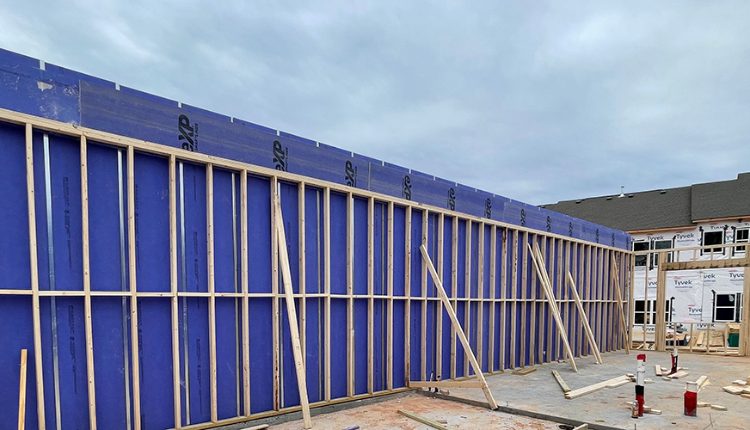
Design considerations for fire and sound wall assemblies
When evaluating a demising wall, area separation wall or party wall assembly, start with the performance goals of the project. The required wall design may be influenced by code requirements, ownership conditions, fire resistance, sound control and the way the structure is framed. Key questions include:
- What type of boundary does the wall create: occupant, building/code-defined or property ownership?
- What fire-resistance rating is required for the complete assembly?
- Is sound control important for the adjacent spaces and what STC rating is needed?
- Will the assembly use wood studs, steel studs, staggered studs, double-stud framing or another system?
- Is cavity insulation needed to support acoustical or thermal performance?
- Are penetrations, joints, doors, ducts or other details addressed so they do not compromise fire or sound performance?
- Does the assembly require enhanced mold, moisture or abuse resistance based on the building environment?
Because tested assemblies depend on the full wall system, product selection should be evaluated alongside framing, insulation, fasteners, sealants and installation details. Products do not carry fire or sound ratings by themselves; complete assemblies are tested and rated for fire resistance and acoustical performance.
Quickly find fire & sound assemblies
Locate wall assemblies by fire rating, STC rating and product components.
Explore now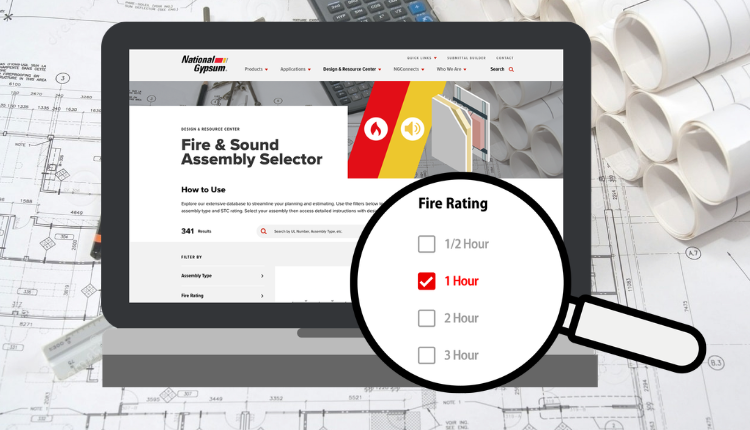
Solutions for wall assembly performance
Once the wall type is understood, product selection should be guided by the assembly’s required performance. Demising walls may place greater emphasis on sound control and occupant privacy, while area separation walls and party walls may involve fire resistance, continuity or ownership-related considerations. In all cases, the complete wall assembly—not an individual product alone—determines tested fire and sound performance.
| Performance need | Wall assembly relevance | Gold Bond product to consider |
|---|---|---|
| Sound control between adjacent spaces | Demising walls in multifamily, hospitality, office and mixed-use buildings | Gold Bond® SoundBreak® XP® Gypsum Board |
| Fire-rated wall assemblies | Demising walls, area separation walls and party walls when fire resistance is required by the tested assembly | Gold Bond® EVOLVE X® Fire-Shield® Gypsum Board for the protected wall Gold Bond® Shaftliner XP® Gypsum Panels for the separation wall |
| Fire resistance plus mold and moisture resistance | Interior wall assemblies where fire resistance and enhanced mold and moisture resistance are both priorities | Gold Bond® XP® Fire-Shield® Gypsum Board |
| Interior moisture and mold resistance | Selected interior wall assemblies in environments where enhanced mold and moisture resistance are important | Gold Bond® eXP® Interior Extreme® Gypsum Panels |
| Area separation or shaftwall-type systems | Applicable area separation wall or shaftwall systems that call for liner panels as part of a tested assembly | Gold Bond® Shaftliner XP® Gypsum Panels |
For example, Gold Bond® SoundBreak® XP® Gypsum Board is a strong fit to mention when discussing demising walls where acoustical privacy is a priority. Fire-Shield® and XP® Fire-Shield® products can be referenced more broadly when fire-rated assemblies are part of the design criteria. Shaftliner eXP® should be used more selectively, where the project involves an applicable area separation or shaftwall-type system being constructed in advance of the building’s enclosure.
Need assembly guidance?
For additional expertise on wall assemblies, call 1-800 NATIONAL or connect with a Construction Design Manager.
Connect todayBe the first to hear of new NGConnects Blog posts by subscribing here for early access.