


 Building Knowledge
Podcast #15: Cement board installation best practices
Master key installation techniques, understand critical details and avoid common pitfalls across interior and exterior cement board applications
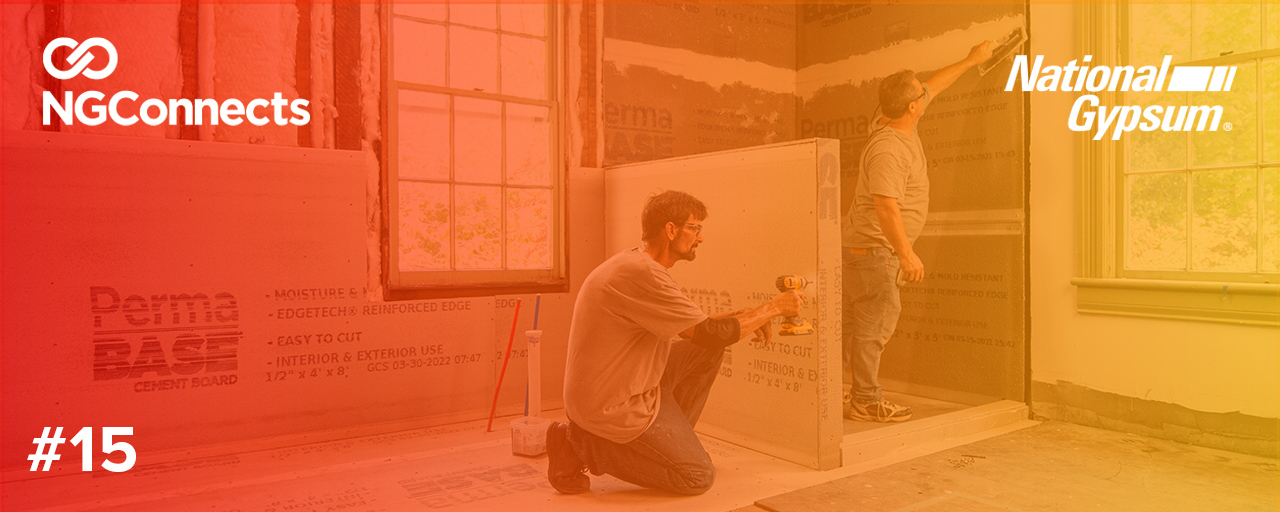
Whether finishing an interior shower surround, detailing an exterior stucco wall or installing a thin stone veneer system, substrate performance can make or break a project. Field-fabricated components and improper fastening techniques can increase the risk of moisture damage, cracking and costly insurance claims. Factory-engineered cement board solutions are designed to deliver consistent performance, but only when installed according to proven best practices.
In this episode, host Nolan Kondrich connects with J.D. Cohen, PermaBASE market development representative for the Southeast, to explore the core principles of cement board installation. Bringing nearly 20 years of expertise to the conversation, J.D. breaks down proper board thickness, taping requirements, moisture management and the crucial science behind alkali resistance.
Listeners will learn:
- The cement board advantage: How factory-built rigid substrates made of Portland cement, aggregate and glass mesh eliminate the fabrication failures associated with traditional wire lath, saving time, reducing materials and meeting ANSI A118.9 and ANSI A108.11 standards.
- Interior shower surround essentials: How cement board excels in wet areas, why 1/2" board thickness is mandatory for wall applications (never 1/4") and why installers must leave a 1/4" gap above the shower pan ledge to prevent wicking.
- Exterior stucco performance: How PermaBASE® Cement Board serves as a drop-in replacement for metal lath and scratch to save labor, keep job sites clean and provide high-impact resistance compared to standard EIFS.
- Thin stone and brick veneers: Strategies for bringing order to the exterior adhered veneer market, including the critical role of secondary drainage planes for moisture management and proper architect and engineer involvement for control joint placement.
- The alkali factor: Why alkali-resistant screws and joint tape are critical when working with cement board and how Portland cement alkalinity can break down standard materials over time.
Want to know more?
- Watch PermaBASE installation videos
- Explore the PermaBASE resource page
- Learn more about PermaBASE® Cement Board products
- Listen to Episode 13: The Complete Guide to Waterproof Cement Boards
View and download the episode transcript
Follow along with the conversation. Download the episode transcript.
Connect with us!
Do you have a question you’d like us to answer or a topic we should cover? We want to hear from you. Email your ideas to podcast@nationalgypsum.com.
The information provided in this podcast is for general information purposes only. For specific building or design questions, please consult with the 1-800-NATIONAL® Construction Services team or your regional National Gypsum construction design manager. Always use products according to the manufacturer’s recommendations.
Be the first to hear the NGConnects Podcast, subscribe here for early access.


