Quick guide to shaftwall enclosures and area separation walls

OnBoard | April 2026

For life safety, structural independence, fire resistance and installation efficiency in commercial construction.
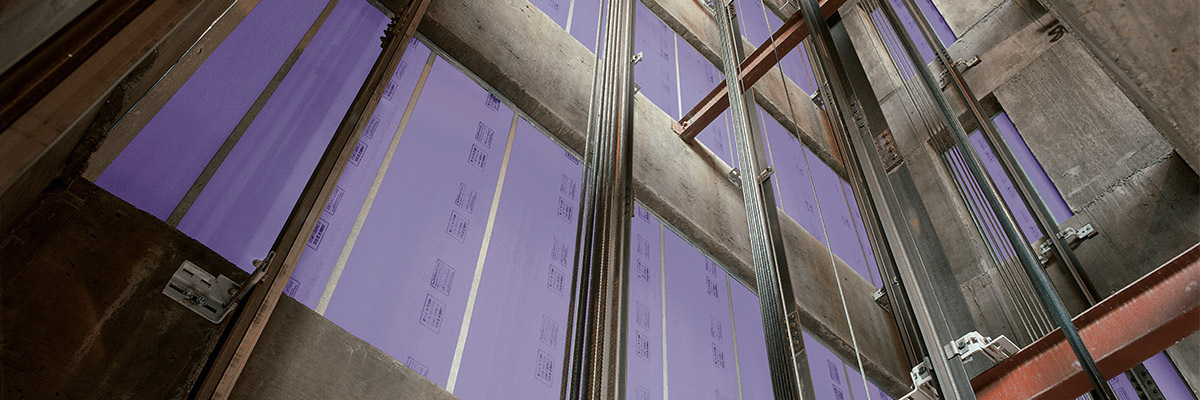
Shaftwall enclosures are fire-rated wall assemblies that can be installed from one side. They are used to enclose elevator shafts, stairwells and service shafts in low-, medium and high-rise commercial and residential buildings.
The cavity shaftwall system began as a design challenge for the 110-story World Trade Center, which opened in 1973. A team of architects and engineers were charged to develop a gypsum-based alternative to conventional masonry elevator enclosures for what was then the world’s tallest building.
In addition to maintaining structural integrity, shaftwall enclosures are lightweight, easy to install, weather-, sound- and fire-resistant and more economical than other types of shaftwall construction. After the 9/11 attack on the World Trade Center, an International Building Code (IBC) update was added. This update ensures that shafts in high-rise buildings be hardened and impact-resistant to prevent debris or other objects from penetrating after an impact or explosion.
Area Separation Walls (ASW) create distinct, structurally independent fire areas between multifamily residential buildings, townhouses and condominiums. They help prevent fire from spreading and reduce noise transmission between units. These nonload-bearing, fire-rated gypsum board assemblies attach to framing on both sides of the wall with aluminum breakaway clips. They are typically installed between steel H-studs and C-runners.
Shaftwall Enclosures (Elevators, Stairs, Mechanical)
Shaftwall enclosures provide a means of egress for building occupants in the event of a fire or other emergency. Shafts connecting four or more stories require a 2-hour fire rating while those with fewer stories require a 1-hour fire rating. Fire barriers must be continuous from a floor/ceiling assembly below, through concealed spaces (including above ceilings), to the underside of a floor or roof deck above. High-rise stair and elevator shafts require resistance to both soft- and hard-body impacts (2009 IBC code 403.2.3.2).
Components for shaftwall enclosures include shaftliner, J-track, shaftwall studs, resilient furring channels, control joints and more. The PURPLE Book® (pages 50-95) provides comprehensive information about various materials and studs required. UL assembly W419 is usually recommended for a cavity shaftwall enclosure. There are variations in this UL design, so select the best option for your project. There are also differences in stud types (I-studs, CT-studs or CH-studs), so make sure your drawing details match the UL design requirements for your specified application.
To help specify the right products for your project, consult our easy-to-use Fire & Sound Assembly Selector™. Our NGConnects Blog post, 10 Things to Know About Shaftwall Enclosures and Assemblies, provides additional information and guidance.
Video: How to Build a Shaftwall in Commercial Construction - For step-by-step installation instructions
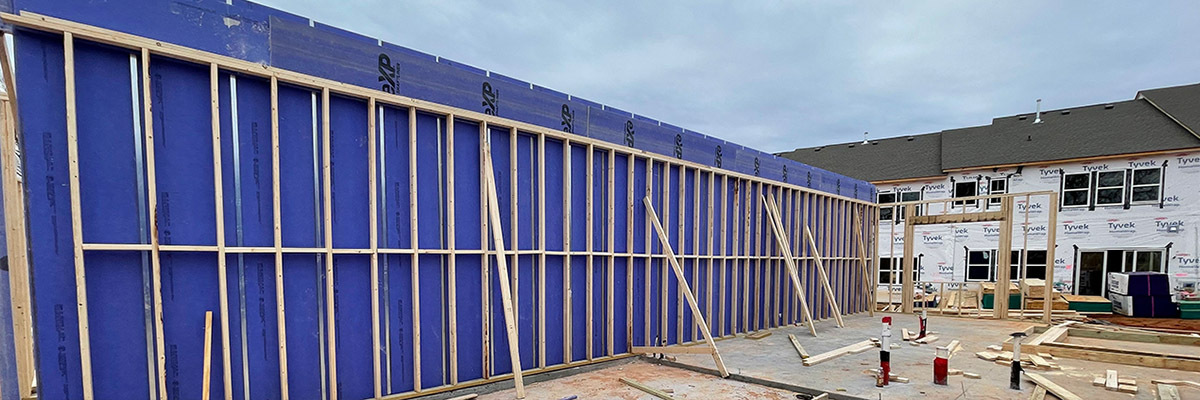
Area Separation Walls
Construction that utilizes ASW includes apartments, condominiums, townhouses, hotels and conventional and podium multifamily buildings. Multifamily wood-framed buildings must incorporate area separation fire walls (2- and 3-hour) between units to achieve code required separation of buildings and limit fire spread in accordance with the IBC.
UL assemblies U347 (2-hour) and W454 (3-hour) are recommended for area separation walls. Each UL design has several options, so be sure to choose the right option that aligns with your project requirements. For more information, consult our NGConnects Blog post, 5 Questions About Multifamily and Area Separation Walls.
Video: How to Build an Area Separation Wall- illustrates the detailed construction of 2-hour ASWs.
Products to specify
Construct lightweight fire barriers for cavity shaftwalls, stairwells and area separation walls with one of these shaftliner products. Offering enhanced stability and durability, fiberglass mat-faced shaftliner is ideal for areas where ongoing moisture exposure is a concern, including high-humidity areas, below-grade installations and spaces with strict hygiene standards. Contact me if you need help choosing.
- Gold Bond® eXP® Shaftliner – Fiberglass mat-faced gypsum panel (1”) that offers a 12-month extended exposure warranty and mold and moisture resistance. Its Type X core is an approved component in fire-rated designs.
- Gold Bond® Shaftliner XP® – Paper-faced gypsum panel (1”) that offers mold and moisture resistance. Its Type X core is an approved component in fire-rated designs.
"Shaftwall systems and Area Separation Walls account for a high percentage of the questions that come to our 1- 800-NATIONAL® and CDM team. They are vital to lifesafety protection with lots of pieces and parts. The technical marketing team at National Gypsum is always available to discuss your questions and provide support."
Thad Goodman

Thad Goodman
Construction Design ManagerNational Gypsum Company"Life safety performance and fire resistance compliance are critical components of the building design and construction process and must be executed with precision. National Gypsum’s technical marketing team provides you with the specialized support you need, including AIA-accredited presentations delivered either in person or virtually. In addition, we provide a suite of digital tools and technical resources. Our goal is to help you identify accurate, code-compliant information and implement the best solutions to meet your project requirements."
Amy Wilson

Amy Wilson
Construction Design ManagerNational Gypsum CompanyMore about shaftwall enclosures and area separation walls
These resources provide details for specific, tested assemblies.
- The PURPLE Book – for shaftwall enclosures
- The Wood Book™– for area separation walls
- Fire & Sound Assembly Selector – to streamline your planning
Insightful content – from the NGConnects Blog