Building Knowledge
The value of ASTM-verified mold-resistant joint compound
Protect wall systems and indoor environments with ASTM-verified mold-resistant joint compound and help improve air quality and long-term durability
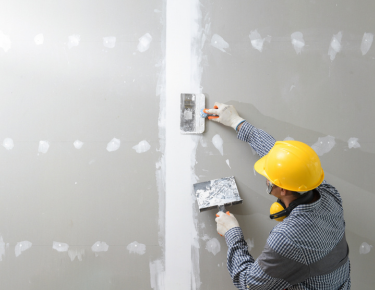
In today’s built environment — where tighter building envelopes, fluctuating humidity levels and heightened expectations around indoor air quality converge — the materials used for commercial and residential construction must deliver both quality and reliable performance. Joint compound may not be the most visible component of a building project, but it plays a critical role in long-term durability, finish integrity and occupant well-being.
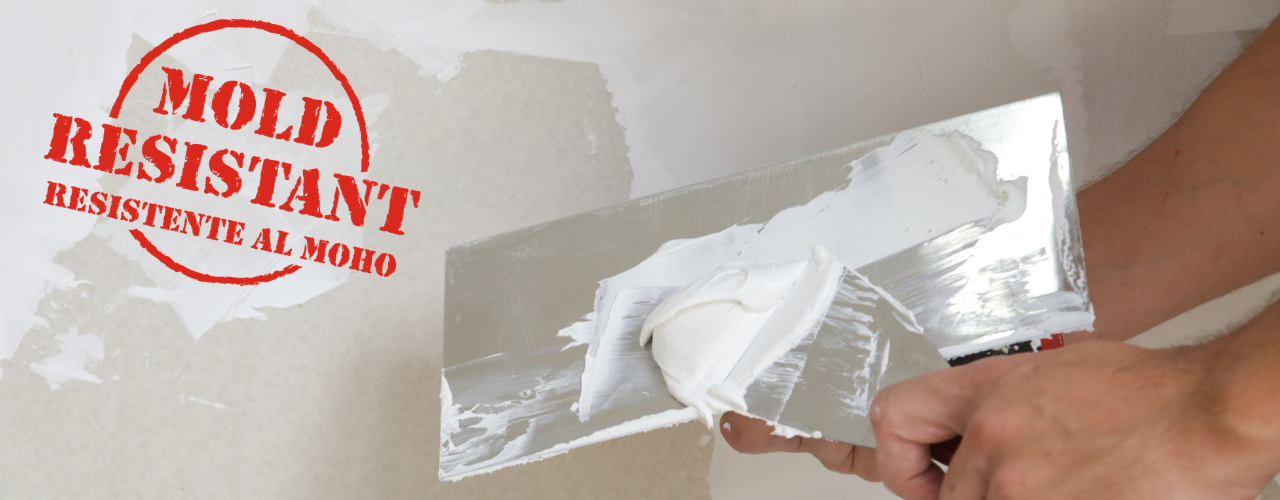
ProForm Finishing Products, LLC, an affiliate of National Gypsum Company, offers a selection of ready mix and setting joint compounds that achieve the highest mold resistance scores in ASTM testing, a standardized process used to evaluate the quality, safety and performance of materials and products according to ASTM International standards.. For contractors, builders and architects alike, that level of documented performance makes mold-resistant formulations less of a niche upgrade and more of a smart specification baseline, especially as owners and occupants demand stronger performance and healthier interiors.
The ripple effect of mold growth within a wall system
Minor moisture events, such as condensation on ductwork, slow plumbing drips or small roof leaks, are a reality in both commercial buildings and homes. Paired with everyday humidity fluctuations and HVAC imbalances, these routine issues often go unnoticed but can add up to bigger problems over time. And while no single product defines indoor air quality, specifying mold-resistant joint compound and building materials within the wall assembly can meaningfully reduce the potential for microbial growth in concealed or semi-concealed spaces.
The negative effects of mold growth can cascade across both building performance and occupant experience, with the potential to:
- Cause visible staining and discoloration, requiring repair or replacement
- Accelerate deterioration of adjacent materials, including drywall and structural components
- Contribute to airborne particulate issues if mold growth becomes disturbed
- Undermine indoor air quality (IAQ) objectives and wellness-driven design standards
- Create reputational and liability risk for builders, architects and contractors
When joint compounds resist fungal growth, the likelihood of these issues decreases.
The performance standard: Why ASTM testing matters
In an industry filled with performance claims, third-party testing standards provide the objectivity needed to evaluate and compare material performance with confidence.
Rather than relying on generalized “mold-resistant” claims, ASTM standards establish controlled conditions that simulate environments highly conducive to fungal growth, effectively stress testing materials under worst-case scenarios. Products that achieve the highest possible scores demonstrate exceptional resistance to mold development.
- ASTM D3273, Standard Test Method for Resistance to Growth of Mold on the Surface of Interior Coatings in an Environmental Chamber: This test assesses the resistance of interior coatings to mold and mildew growth in a controlled environment, rating the level of fungal defacement on a scale of 0 to 10 (10 is no visual fungal defacement).
- ASTM G21, Standard Practice for Determining Resistance of Synthetic Polymeric Materials to Fungi: This test determines resistance of synthetic polymeric materials to fungal growth, assessed on a rating scale of 0 to 4 (0 is no mold growth).
Understanding ASTM standards: A key to quality and performance
ASTM International plays an important role in ensuring building product consistency and safety.
Read more
ProForm manufactures two joint compounds and five timed-setting compounds that have earned a perfect score in both ASTM D3273 (achieved a 10 rating) and ASTM G21 testing (achieved a 0 rating):
ProForm® All Purpose with Dust-Tech® Joint Compound
- Reduces airborne dust by up to 60%, allowing for quick and easy cleanup
- Designed for tape application, fastener spotting and complete joint finishing
- GREENGUARD Gold Certified for low chemical emissions into indoor air during product usage
ProForm® Lite Blue® with Dust-Tech® Joint Compound
- Reduces airborne dust while sanding
- Approximately 30% lighter than conventional ProForm Joint Compound
- GREENGUARD Gold Certified for low chemical emissions into indoor air during product usage
ProForm® Quick Set Lite™ Setting Compound
- Available in 5-, 20-, 45-, 90- and 210-minute set times
- 30% lighter than a standard setting compound
- GREENGUARD Gold Certified for low chemical emissions into indoor air during product usage
For architects and specifiers, documented compliance with ASTM standards offers an added layer of confidence. When performance can be verified, it reduces ambiguity across the design-build-install chain.
Moisture is inevitable but mold doesn’t have to be
Behind every finished wall is a sequence of material decisions that influence durability, air quality, efficiency and long-term satisfaction. Joint compounds that achieve top ASTM mold-resistance scores provide measurable, documented proof of performance. The most important materials in a project aren’t always the most visible, but they are often the ones that determine how well the space performs over time.
For everything you need to know about ProForm joint compounds, download our comprehensive ProForm Finishing Products Construction Guide.
Frequently asked questions
Is ProForm mold resistant?
No material can be considered “mold-proof,” nor is it certain that any material will resist mold or mildew indefinitely. However, when used in conjunction with good design, handling and construction practices, ProForm ready mix can provide increased mold resistance versus standard ready-mixed compounds. As with any building material, avoiding water exposure during handling, storage, and installation and after installation is complete is the best way to avoid the formation of mold or mildew.
What is the difference between “Working Time” and “Setting Time”?
Working time refers to the period during which the ProForm setting compound is usable for application. At the end of this time, the material begins to stiffen and can no longer be spread easily. Working time should correspond to the required time for the actual application.
Setting time refers to the time after which the applied ProForm setting compound will become adequately hardened so that another layer can be applied. For manufactured or modular builders, the setting time should match your timetable for moving a floor along the line.
How much does a pail or carton of ready mix cover?
A good rule of thumb is to use nine gallons of ready mix for every 1000 sq ft of wallboard.
Be the first to hear of new NGConnects Blog posts by subscribing here for early access.