Acoustics
Acoustic assemblies in adaptive reuse construction
National Gypsum provides the products and resources to aid in designing quiet spaces from one side of a wall

Adaptive reuse projects are a masterclass in compromise. Architects cherish the existing structure — its history, its embodied carbon and its cost savings — but often inherit partitions that were never designed for modern comfort. If the old building has walls separating a new tenant from an existing one, or a new apartment from an active common corridor, you can’t tear down both sides.
This is where specialized one-sided acoustic assemblies become your secret weapon. They allow you to achieve high Sound Transmission Class (STC) targets without disrupting the adjacent space.
This article highlights sound attenuation strategies for adaptive reuse projects and explores one-sided acoustic assembly solutions found in National Gypsum Company’s The SoundBook®.
Foundational acoustic science: principles for renovation
Sound is like water; it will find every crack and opening, resulting in noise leaks that can undermine comfort and privacy. So, before adding any material, remember to seal the flanking path gaps where the wall meets the floor, roof or adjacent walls and seal all penetrations with acoustical sealant. Use putty pads around electrical boxes. After sealing gaps, address the “big three” of sound attenuation:
In a one-sided retrofit, the challenge is to achieve these three principles using only the accessible side of the partition.
- Damping: Introducing sound-dissipating materials that help reduce the transmission of airborne sound.
- Mass: Adding dense materials such as gypsum board and/or insulation.
- Decoupling: Minimizing the rigid connection between the drywall and framing members.
Create a constrained layer with SoundBreak XP Retrofit Gypsum Board
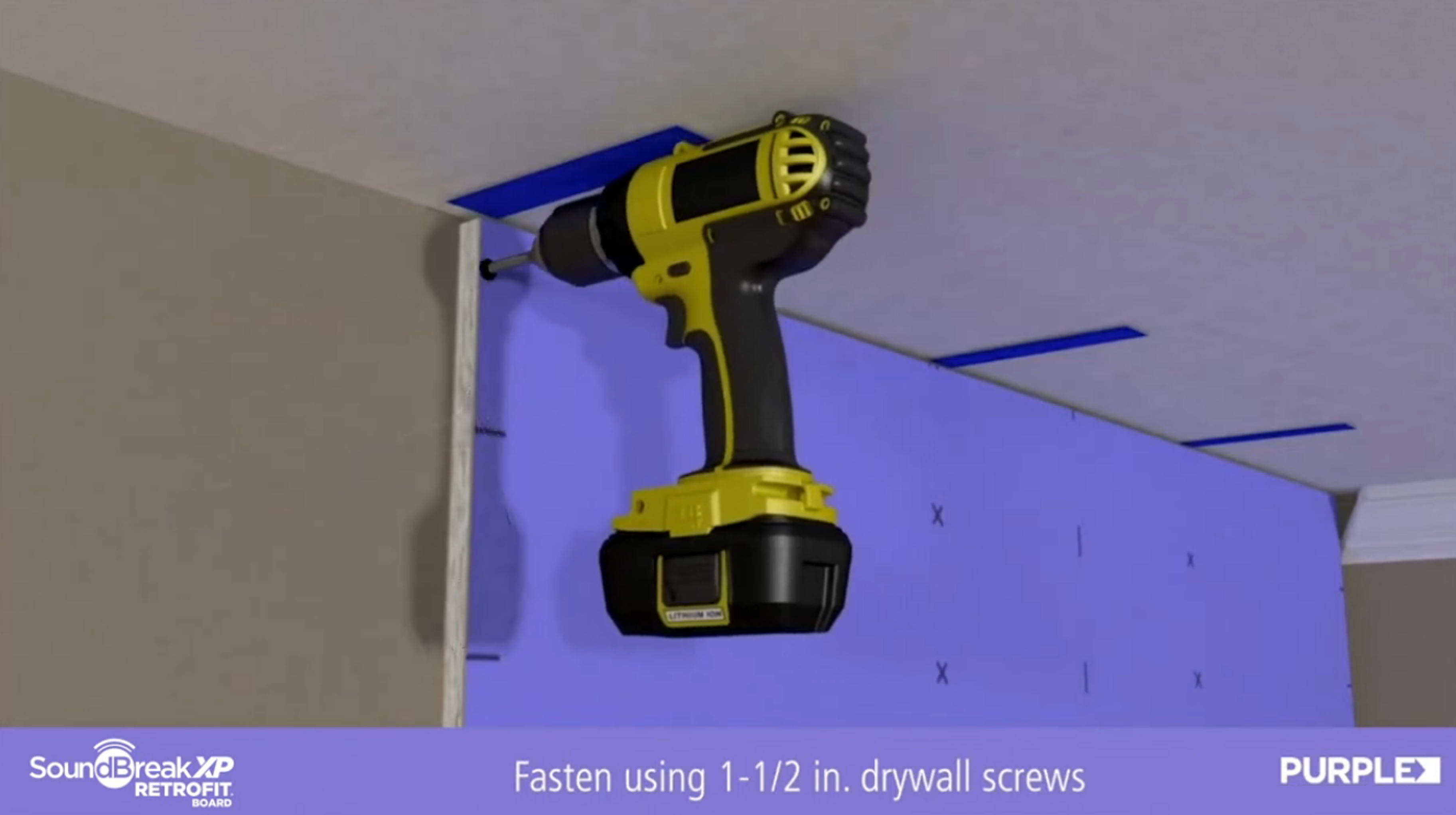
When space is at a premium, Gold Bond® SoundBreak XP Retrofit® Gypsum Board provides an optimal solution.
SoundBreak XP Retrofit — manufactured by Gold Bond Building Products, LLC, an affiliate of National Gypsum Company — has a thin 5/16" profile with a layer of viscoelastic polymer adhered to the back paper. It’s designed to be installed directly over the existing gypsum board, creating a constrained layer to help dissipate airborne noise and boost STC values without ever touching the opposite side of the wall. SoundBreak XP Retrofit can be installed over existing gypsum board, sacrificing minimal square footage, with no demolition required.
- Resource alert: Find SoundBreak XP Retrofit partitions in The SoundBook on pages 99-100.
Beyond Retrofit: heavy-duty one-sided acoustic assemblies
Adaptive reuse often calls for acoustic performance levels far beyond what existing walls can offer. The first step is to gather information about the existing wall to help answer these important questions:
- What is the stud size and spacing?
- Is there insulation?
- How thick is the existing drywall?
With this information, you can estimate the approximate STC rating and understand what upgrades are needed to improve acoustic performance.
Adding mass to boost the acoustic rating
If you can afford to give up some floor space, one solution is to add mass — in the form of standard size gypsum boards — to the accessible side. Adding multiple layers of SoundBreak XP 5/8" Gold Bond® Fire-Shield® Gypsum Board on the accessible side boosts both the fire rating and the acoustic performance concurrently. The density of multiple layers significantly limits the airborne sound waves that can pass through the wall.
- Resource alert: Find variations of UL V497 on pages 7-8 and 29 in The SoundBook.
Decoupling to improve acoustic performance on one side
Decoupling through the use of resilient isolation clips is an effective method for boosting acoustic performance. This method pairs well with Gold Bond® SoundBreak® XP® gypsum board products because these boards, in combination with resilient isolation clips, use all three methods of sound mitigation:
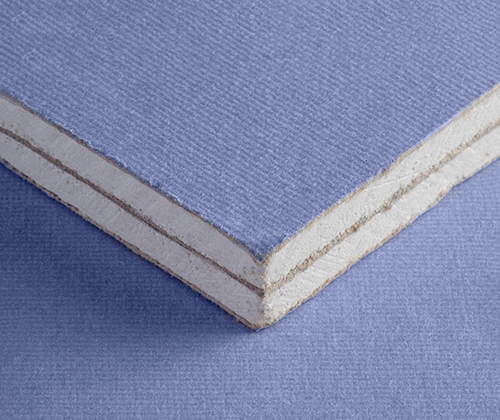
- The gypsum board adds mass.
- The constrained layer dissipates airborne sound.
- The clips decouple the drywall from the framing members.
For one‑sided acoustic assemblies using resilient isolation clips, simply add the furring strips and resilient channels to the studs and the SoundBreak XP portion of the assembly on the accessible side of the wall.
If space and budget are available, another option is to build a decoupled wall next to the existing wall.
- Resource alert: See pages 16 and 22 in The SoundBook for acoustic assemblies that use resilient isolation clips with SoundBreak XP Gypsum Boards.
Resource Alert: The SoundBook
> Pages 47-51: Steel stud chase walls
> Page 85-86: Wood stud chase walls
View The SoundBook
Create quiet with confidence
Adaptive reuse inherently involves complex structural and scheduling challenges. Understanding and using specialized, one-sided acoustic assemblies makes it possible to confidently transform old, porous walls into high-performance, quiet assemblies.
The Fire & Sound Assembly Selector™ is an interactive digital tool designed by National Gypsum to streamline the process of identifying and specifying all types of fire and sound assemblies. Filter assemblies by specific project requirements, such as hourly fire ratings, STC ratings, framing types and insulation. Quick results provide immediate access to downloadable technical resources, including:
- Detailed assembly instructions
- Acoustical test reports and fire-rated assembly details
- Revit files to support construction documentation and code compliance
For additional assistance related to products suitable for adaptive reuse projects, the 1-800-NATIONAL® Construction Services and Construction Design Manager teams are available to help design and detail these often-complex assemblies.
Fire & Sound Assembly Selector
Search nearly 350 assemblies to find the right one for your adaptive reuse project.
Search AssembliesBe the first to hear of new NGConnects Blog posts by subscribing here for early access.