Building Knowledge
Gypsum board solutions for adaptive reuse
Fire and sound performance for repurposed buildings — a sustainable approach to commercial construction
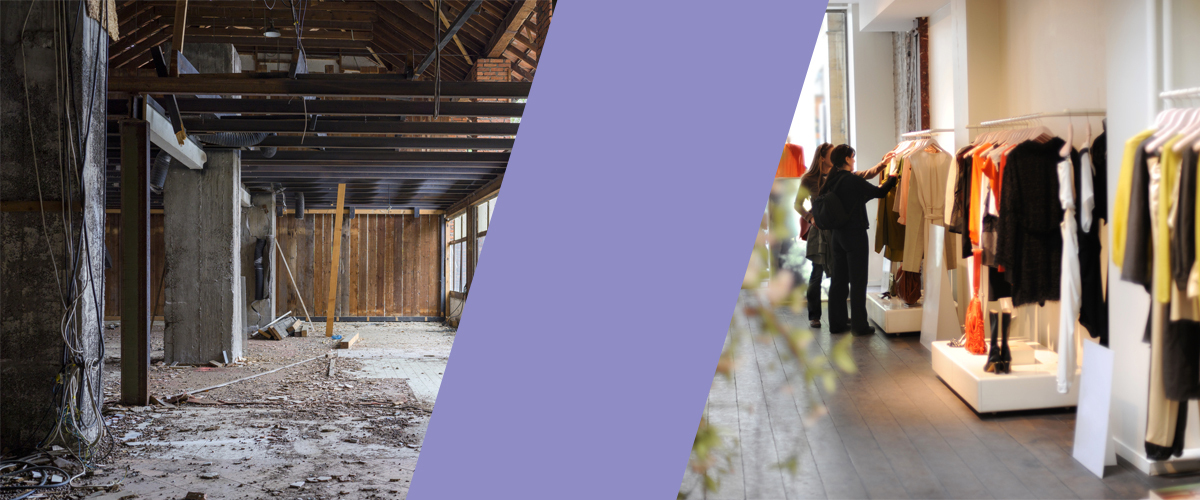
For some people, empty, abandoned or defunct buildings are eyesores to be removed. For many architects, however, these structures are pictures of promise. An abandoned big-box retail building could be transformed into a school. A once-bustling high-rise can be reimagined into a vibrant mixed-use destination, blending residential, office and retail spaces. Or, an old brick manufacturing facility, so quiet it seems haunted, could be remade into apartments.
Renovating existing buildings into new uses, known as adaptive reuse, is all about giving them a new purpose. It’s a broad concept that takes many forms, from revitalizing historic landmarks to upfitting a retail space in a shopping center to better fit its new tenant. The core idea is to reimagine and repurpose.
Adaptive reuse construction offers significant advantages:
- Reduced carbon footprint: Lower the project’s environmental impact by working with existing structures.
- Budget-friendly innovation: Choose cost-effective adaptive reuse over more expensive new construction.
- Preserving historic buildings: Protect and celebrate historic architecture.
Of course, these projects have their own set of challenges, particularly when it comes to meeting modern building codes for fire safety and acoustic performance. In fact, the International Code Council established the International Existing Building Code to help guide safe and cost-effective adaptive reuse construction.
High-performing gypsum board systems can play a role in promoting safety and quality of life in adaptive reuse projects. This article will explore how gypsum boards manufactured by Gold Bond Building Products, LLC, an affiliate of National Gypsum Company, can be a go-to solution for critical fire and acoustic challenges.
Tackling acoustic design challenges in adaptive reuse
Whether it’s upfitting a shopping center retail space or remaking a mill building into multifamily housing, managing acoustics is one of the most common hurdles in adaptive reuse.
How to boost STC performance in existing partitions
Shopping center tenants come and go. Retail trends shift the landscape. The common denominator is the need to create the ideal experience for customers, whether it’s quiet elegance in a jewelry store, inspired energy in a boutique fitness studio or a welcoming atmosphere in the neighborhood coffee shop. That means implementing acoustic measures to reduce the sounds of clanking weights, whooshing cappuccino machines and chatting customers.
Start with the basics
The first step in all acoustic renovation projects should be an assessment of the existing wall assembly to establish a rough baseline of acoustic performance and narrow the options for the most effective renovation solutions. Ask the following:
- What kind of gypsum board is being used and how thick is it?
- What is the stud type — wood or metal — and spacing?
- Is there insulation? And, if so, what type and thickness?
Before making any changes to the wall assembly, seal wall penetrations and gaps with acoustic sealant or putty pads to eliminate flanking paths that allow sound waves to travel through the wall. Look for electrical boxes, light switches and gaps at the top and bottom of the existing drywall panels.
Add acoustic gypsum board
The Gold Bond® SoundBreak® XP® family of products offers solutions for updating existing partitions to improve the Sound Transmission Class performance without sacrificing the space’s square footage.
- Gold Bond® SoundBreak XP Retrofit® Gypsum Boardis just 5/16" thick and designed to be installed over the gypsum board in an existing wall assembly. It comes with specially designed PURPLE® paper on the front and a sound-damping viscoelastic polymer adhered to the back paper to dissipate sound waves.
Solutions Alert: Find seven SoundBreak XP Retrofit wall assemblies on pages 99–100 of The SoundBook®.
- Gold Bond® SoundBreak® XP® Gypsum Board can be added to existing wall assemblies in locations where space isn’t an issue. These 1/2" gypsum boards consist of a sound-damping viscoelastic polymer sandwiched between two pieces of high-density, mold-, mildew- and moisture-resistant gypsum board, with a specially designed PURPLE® paper.
Solutions Alert: Find wood-stud partitions with a layer of SoundBreak XP Gypsum Board on one side on page 69 (16" o.c.) and page 79 (24" o.c.) of The SoundBook.
Find sustainability documentation for the SoundBreak XP family of products in the National Gypsum Design & Resource Center.
How to build acoustically sound wall assemblies for whole-building adaptive reuse
Adaptive reuse construction projects come in all sizes and are best known for transforming entire buildings ranging from historic structures to sprawling 1970s-era malls. Abandoned mills have been repurposed into multifamily residences and corporate headquarters. With the shift to online retail, malls have been reimagined as community college and healthcare campuses. And as remote work remains steady, architects are eyeing high-rise buildings as opportunities for mixed-use communities.
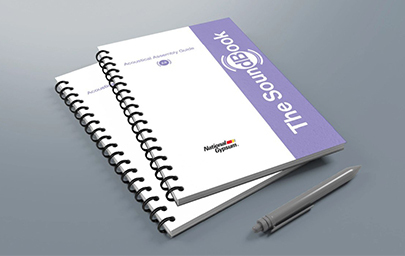
Quiet spaces are essential to learning, healing and living. With over 300 acoustic assemblies in The SoundBook, National Gypsum is a leader in providing acoustic wall and ceiling assemblies for a wide variety of adaptive reuse challenges, including:
- Partitions
- Floor-ceiling assemblies
- Steel and wood chase walls
- Area separation walls
- Shaftwalls
Overcoming fire-rating hurdles in adaptive reuse
Like acoustics, fire safety requirements present unique challenges in adaptive reuse, especially when dealing with existing structures and varying levels of accessibility. Projects might face:
- Walls that are accessible from only one side
- Retrofitting older materials that lack modern fire protection
- Preserving architectural features while meeting fire code compliance
Consider this scenario: A fast-casual restaurant moves into a retail space that was formerly a gift shop in a mixed-use development, with residential units above and a clothing store next door. The fire-rated assemblies in the new restaurant will need to be upgraded from 1-hour to 2-hour.
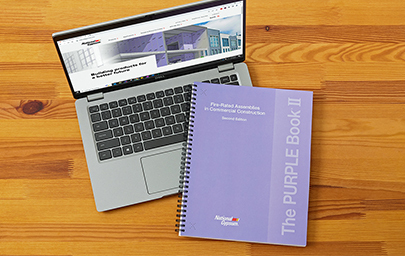
The PURPLE Book®, available from National Gypsum, includes a wide variety of fire-rated assemblies appropriate for use in adaptive reuse projects such as the example above.
- UL Design V497: This assembly, with options for 1- and 2-hour ratings, is ideal for upgrading unrated walls where only one side of the wall is accessible.
- UL Design V449: This assembly is used to upgrade 1-hour partitions to 2-hour by adding additional gypsum board layers to one side only.
- UL Design V438: This assembly is ideal for 1-4 hour partitions with access to both sides.
Finding the ideal assembly with the Fire & Sound Assembly Selector
Navigating the myriad of fire and sound ratings can be daunting, especially when trying to find an assembly that meets both requirements. That’s why National Gypsum developed the Fire & Sound Assembly Selector™, an online tool that simplifies the process.
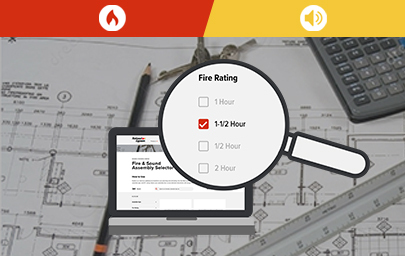
Here’s how it works:
- Enter parameters: Users can input specific details, including assembly type, desired fire rating, type of framing, stud spacing, desired STC rating, stud sizes, stud gauge, insulation type and accessibility.
- Instant solutions: The selector identifies UL assemblies that meet both fire and acoustic ratings.
- Comprehensive information: Each listing includes design details, CAD files, acoustic test reports and Revit files, all available for download.
- Explore more: If a particular option isn’t quite what is needed, the selector also recommends related assemblies.
This incredibly powerful resource can help you quickly select the right gypsum board system for an adaptive reuse project.
Documenting product sustainability made easy
Since sustainable building is one of the main drivers of adaptive reuse construction, National Gypsum provides a library of sustainability documents, including Environmental Product Declarations, Health Product Declarations and UL GREENGUARD Certifications. Found in the Design & Resource Center, users can find the documents they need by filtering by document type, manufacturer and product family.
Reimagining with confidence
Adaptive reuse construction projects, in all of their diverse forms, offer a sustainable and creative path forward for the built environment. While they present unique fire and acoustic challenges, innovative gypsum board solutions provided by National Gypsum offer cost-effective ways to address these issues. For architects and specifiers, a regional construction design manager is available through every phase of your adaptive reuse project. From expertise on products in fire- and sound-rated assemblies to education on building requirements, we have a representative available to provide design assistance every step of the way. Connect now at the National Gypsum Expert Connection.
To find the right assembly for your next adaptive reuse project, explore the Fire & Sound Assembly Selector.
Be the first to hear of new NGConnects Blog posts by subscribing here for early access.