Roofing Systems
Six key standards in low-slope roofing — and why they matter
Understanding the hidden layer in commercial roof assemblies is critical
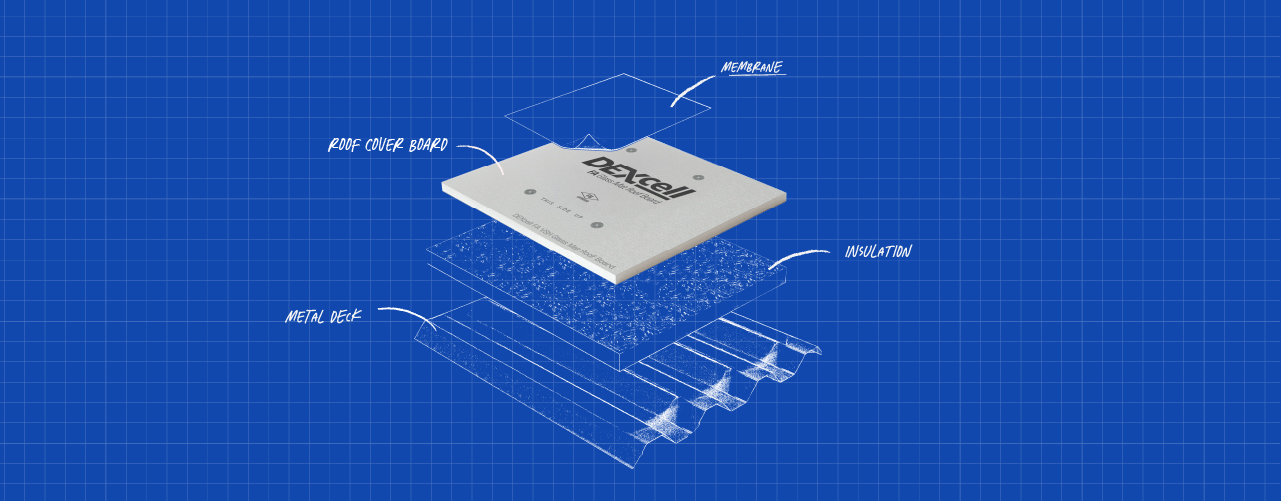
For roofing consultants, architects and specifiers, designing high-performance low-slope commercial roof assemblies means more than just choosing a membrane or maxing out an insulation R-value. It means understanding the standards and third-party approvals that define system success. And at the core of many of those assemblies is one unsung hero: the roof cover board.
What to know when specifying roof assemblies
Here’s a breakdown of six key standards and material classifications that govern commercial roof assemblies and why understanding them is essential when specifying systems designed to last.
1. FM 4450 - Wind uplift resistance in insulated roofs
FM 4450 is a performance-based standard developed by Factory Mutual to evaluate an insulated roof assembly’s resistance to fire and wind uplift. Importantly, FM 4450 is not a test of individual components. Instead, it’s a system-level test that includes the roof deck, insulation, fasteners, adhesives, cover board, and membrane. The testing protocol simulates uplift pressure on the entire roof assembly – deck, fasteners or adhesive, insulation, cover board and membrane – to replicate real-world wind conditions. The performance of each layer affects the result.
- Why it matters:
Approval to FM 4450 is often a minimum requirement in wind-prone regions or on Factor Mutual insured buildings. A high-performance, high-density (hard) cover board such as glass mat or cement board helps distribute uplift forces more evenly across the membrane and insulation layer, improving the integrity and performance of the full assembly.
2. FM 4470 - Very severe hail, fire and impact testing
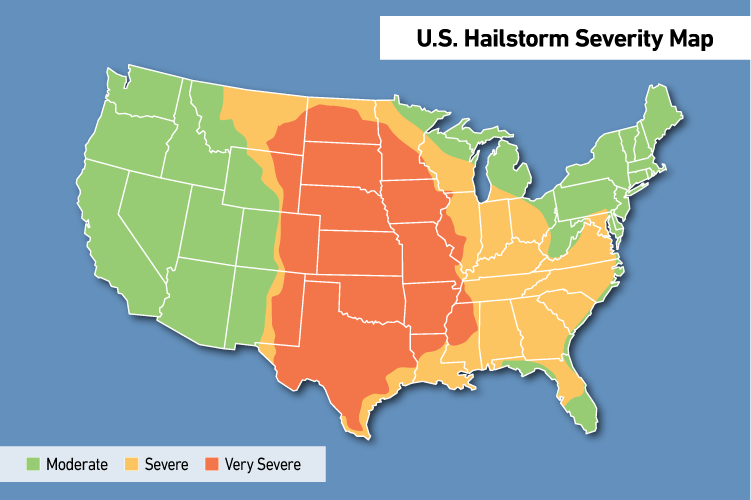
FM 4470 expands on 4450 to include impact resistance to fire, foot traffic and, most notably, hail impact, including the Very Severe Hail (VSH) classification. To achieve a VSH rating, the roof assembly must endure repeated simulated hail strikes without compromising insulation or waterproofing performance.
- Why it matters:
Roofing assemblies seeking FM 4470 VSH classification often require a high-compressive-strength cover board to prevent insulation and membrane damage under impact. For example, DEXcell FA VSH® Glass Mat Roof Board was specifically designed to meet these requirements in single-ply systems. These boards serve as a rigid substrate that protects both the membrane above and insulation below from impact damage, which is critical in hail-prone zones or under rooftop mechanical units and solar arrays.
3. ASTM C473 – Physical properties of gypsum boards
ASTM C473 outlines standardized test methods for gypsum board products, measuring key physical properties like flexural strength, core hardness, edge hardness, water absorption, nail pull resistance and dimensional stability.
- Why it matters:
A gypsum-based cover board that meets ASTM C473 is proven to resist warping, cracking, and surface damage, making it a durable protective layer between insulation and membrane. And DEXcell® Cement Roof Boards are engineered to meet this standard, offering long-term dimensional stability, wind uplift resistance and resilience.
4. UL 790 – Fire resistance of roof assemblies
UL 790 (and ASTM E108) tests roofing systems for surface flame spread, intermittent flame exposure and fire penetration from above. Fire-resistance ratings represent the results of tests on assemblies made up of specific materials in a specific configuration. For example, DEXcell® Glass Mat Roof Board (minimum ¼”) meets UL Class A fire ratings for roofing systems up to unlimited slope per ANSI/UL 790 and ULC CAN-S10, while 5/8” (15.9 mm) DEXcell Glass Mat Roof Board is UL Classified for use in numerous hourly rated UL assemblies, including UL "P" roof assemblies.
- Why it matters:
Including a non-combustible cover board such as glass mat gypsum or cement can help an assembly achieve a Class A fire rating – required by many jurisdictions for commercial buildings – especially when installed over combustible decks. Cover boards also help reduce fire spread internally by acting as fire barriers within the assembly.
Product solutions for data center wall and ceiling construction
Oct. 30, 2025
Innovative materials contribute to sustainable data center design, as well as fire safety, acoustics and moisture control.
Read article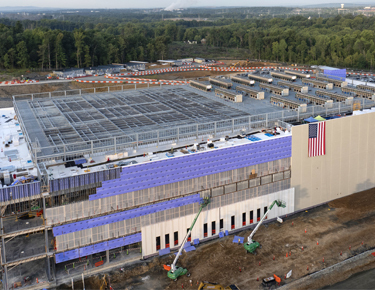
5. ASTM C1177 – Performance for glass mat-faced gypsum substrates
ASTM C1177 defines requirements for glass mat-faced gypsum panels used in exterior applications, including roof cover boards. It ensures enhanced moisture resistance, surface integrity, and dimensional stability under exposure.
- Why it matters:
Cover boards that meet C1177 can resist mold and moisture damage, which is especially important during construction delays or when the roof is temporarily exposed to weather.
6. ASTM C1325 – Cementitious panels for exterior systems
ASTM C1325 sets the criteria for non-structural cement-based panels used in building envelopes. These boards, typically composed of Portland cement reinforced with glass mesh or fibers, are valued for their water resistance, impact resistance, and exceptional durability.
- Why it matters:
Cement cover boards that meet ASTM C1325 are ideal for projects with high moisture exposure or frequent foot traffic. They are particularly beneficial under rooftop mechanical equipment frequently accessed by maintenance workers.
“Roof cover boards are the quiet workhorses of a commercial roof system. They’re the layer most people overlook, but the one that often determines whether a roof performs for decades or fails far too soon. When you add a high‑density cover board, you’re not just checking a box — you’re protecting the membrane, enhancing fire and wind performance, improving impact resistance and ultimately extending the life of the entire assembly.”
Warren Barber

Warren Barber
Senior Manager, Gypsum and Specialty Systems/DEXcellNational GypsumCover boards and assembly approvals: why systems matter
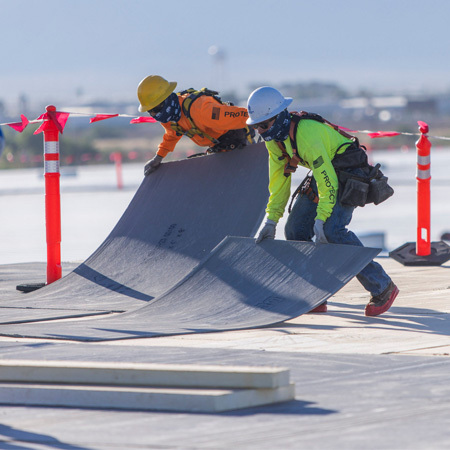
Cover boards don’t just meet individual material standards. They play a critical role in helping entire assemblies meet FM and UL approvals. It’s important to note that system approvals like FM 4450 and FM 4470 only apply to tested combinations of components. Membrane manufacturers often list specific cover boards as required for assembly performance, fire resistance, and uplift ratings.
In some assemblies:
- A cover board may be required to meet FM 4470 VSH classification.
- A specific board thickness (e.g., 5/8") may be needed to achieve a 1- or 2-hour UL fire rating.
- Cover boards may also be a warranty requirement from major membrane suppliers or a compliance requirement for insurance.
Without the right cover board, the entire system could fail to meet approval, which could jeopardize long-term performance, insurance coverage, or code compliance.
And when it comes to codes, it’s important to watch state and local codes as they evolve to reflect climate risk, storm severity and environmental durability. For example, Miami-Dade and Florida Building Codes increasingly demand better performance, and California continually strengthens thermal performance and fire resistance standards.
Getting standards right starts with the hidden layer
Whether you're specifying new construction or replacing an aging roof, the standards that govern low-slope roofing aren’t optional. They’re foundational. And in many cases, meeting those standards – and often those codes – means choosing the right cover board. DEXcell Roof Boards offers a single source for four distinct board product options to address these various standards.
From wind and hail to thermal performance and fire safety, the standards outlined above highlight why cover boards aren’t just an upgrade – they’re an integral part of a code-compliant, high-performance commercial roof system.
Smart roofing decisions begin here
DEXcell roof boards are engineered for consultants, architects and roofing professionals who demand reliability in every layer of the assembly. Get the complete technical details you need to specify with confidence and design for long‑term resilience.
Download the Technical Guide